
We live in a world built for speed. Ready-made goods arrive at our door in hours, machines churn out objects by the millions, and screens occupy more of our attention than our hands ever do.
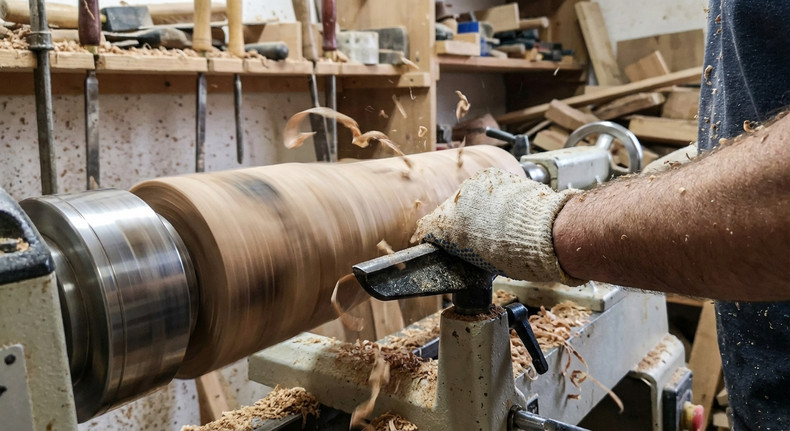
Turning a piece of timber on a lathe is slow. It demands attention. It requires care. And it rewards patience with something that no machine-made object can ever offer: timeless character, warmth, and soul. Every shaving that falls, every line revealed in the grain, is a testament to human touch.
Woodturning is more than a hobby, it’s a practice.
Craftsmanship: Learning the feel of the timber, the balance of the tool, and the rhythm of the lathe.
Mindfulness: The process demands presence, offering a quiet counterpoint to a world of notifications and deadlines.
Heritage: In Tasmania, and across the globe, woodturning has been a way to transform simple timber into functional beauty for generations.
Even small projects such as a hot bread knife, a cheese knife, or a bottle stopper carry meaning. They remind us that objects can be made with intention, that the everyday can be beautiful, and that our hands are capable of creating things that endure.
In an era dominated by mass production, woodturning matters because it keeps making personal, reminds us of the value of slow, deliberate work and turns ordinary timber into objects people treasure and share.
At Tas Turning Supplies, we celebrate this philosophy. Our project parts are designed to help makers bring these values to life — to turn a block of timber into something practical, beautiful, and full of meaning.
Because in the end, woodturning isn’t just about the final object. It’s about the story, the craft, and the quiet satisfaction of creating something by hand in a world that moves too fast.